Fatal Cable Snap and Geotechnical Failure: An Investigation into the Systemic Crisis Driving Chinese Bridge Collapses
I. Executive Summary: The Dual Crisis of China’s Infrastructure Safety
Intense scrutiny is once again focused on China Infrastructure Safety following two high-profile, deadly infrastructure failures in the latter half of 2025. These incidents—the catastrophic railway bridge collapse in Qinghai Province and the sudden failure of a major highway bridge in Sichuan—have propelled the terms “Chinese Bridge Collapses” and “Hongqi Bridge Collapse” into high-volume global search trends. While the two events are often grouped in general searches, they represent distinct failure modes: internal structural collapse during the construction of the Jianzha Yellow River Bridge, and external geotechnical failure leading to the collapse of the newly opened Hongqi Bridge on National Highway 317.1
The investigation into these tragedies indicates that these are not isolated technical failures but rather symptoms of chronic, underlying vulnerabilities within China’s public construction sector. These vulnerabilities include deeply embedded corruption, supervision malpractices, and regulatory environments that prioritize the speed of infrastructure delivery over rigorous quality assurance and ethical standards.4
The Qinghai disaster resulted in significant human cost, with at least 12 fatalities.1 The accompanying logistical disruptions, public confidence crisis, and severe economic consequences underscore a failure to uphold principles of sustainable development in major engineering projects.7 The systemic nature of these risks not only threatens domestic safety but also raises serious questions regarding the quality and governance mechanisms being exported globally through China’s international infrastructure initiatives.
II. The Qinghai Tragedy: Internal Failure and the Cost of Construction Speed
The first major incident unfolded in northwestern China’s Qinghai Province on August 22, 2025, when a section of a railway bridge under construction over the Yellow River collapsed. This critical structure, officially identified as the Jianzha Yellow River Bridge (also known as the Jianzha Yellow River Super-large Bridge) 1, was part of the vital Sichuan-Qinghai Railway. It had been widely publicized as a flagship project, described as the world’s largest-span double-track continuous steel truss arch bridge and China’s first railway steel truss arch bridge to span the Yellow River.9
The Technical Point of Failure
The collapse occurred at approximately 3 a.m. local time while 16 workers were engaged in a highly technical and delicate tensioning operation.1 State media reports confirmed the immediate, mechanical cause: a steel cable failure.9 The snapping of this critical structural element caused a large section of the bridge’s curved aquamarine arch to suddenly give way, plunging bent structural elements and debris into the Yellow River below.9
The resulting accident was catastrophic. At least 12 people were confirmed killed, and four others were initially reported missing.1 The severity of the loss of life, occurring during the controlled phase of construction, points directly to severe lapses in safety protocols, technical supervision, or material quality control. Industrial accidents of this scale are often cited by analysts as common in China, where vague regulations and relaxed safety standards frequently prevail.9
Corporate Accountability and Public Backlash

The project was overseen by the state-owned enterprise (SOE) China Railway Construction Corporation (CRCC), one of the largest infrastructure contractors globally.11 Following the incident, the CRCC issued a statement of condolences and pledged full cooperation with the central government task force sent to investigate the failure.1
However, the public response was immediate and critical. Widespread commentary on Chinese social media platforms, such as Weibo, branded the collapse as “another preventable disaster”.11 This public reaction suggests a broader societal skepticism regarding the commitment to safety and quality among major state-owned entities. The incident’s timing—in the middle of the night—further suggests adherence to high-pressure construction schedules where expediency may supersede necessary safety margins and meticulous engineering oversight required for complex operations like cable tensioning.
III. The Sichuan Failure: Geotechnical Vulnerability in Newly Built Structures
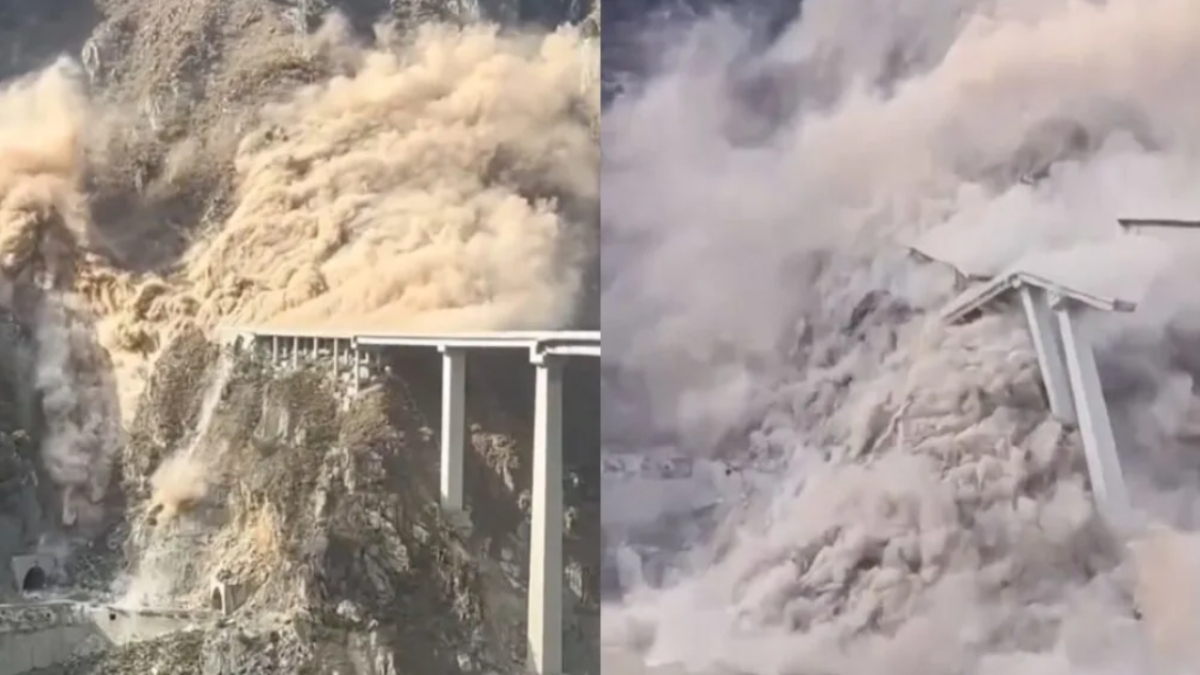
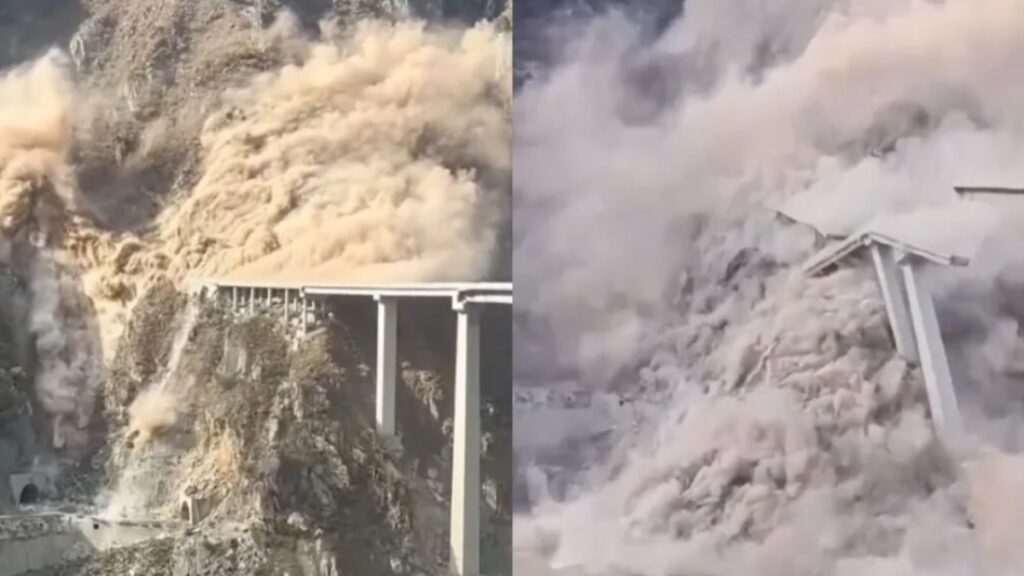
A second, distinct, high-profile failure that contributed heavily to the surge in search activity was the Hongqi Bridge Collapse in Sichuan Province in November 2025. This incident involved a different failure mechanism: geological instability and external forces acting on a structure that had recently entered service.
Mechanism and Location
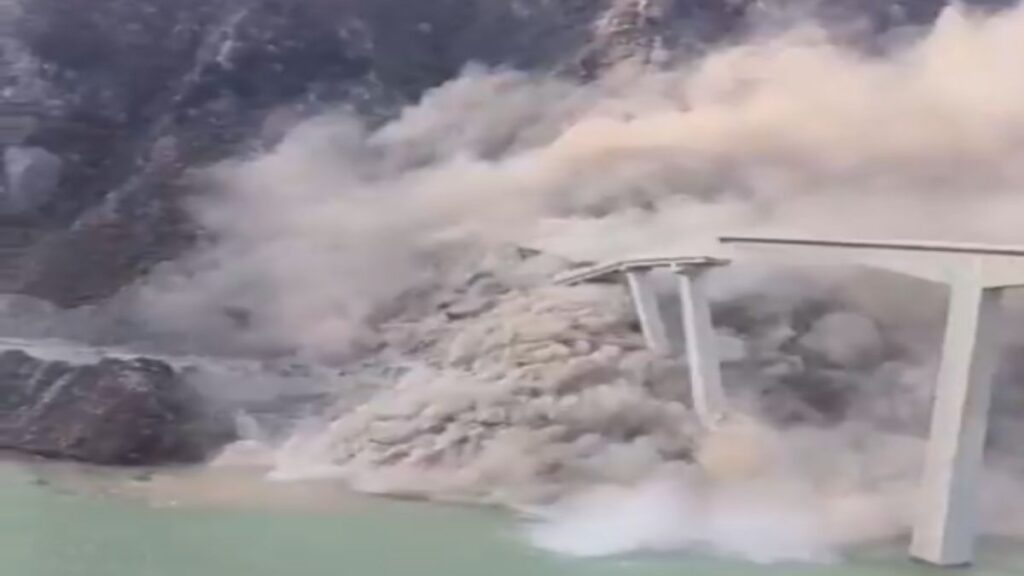
The Hongqi Bridge, a 758-meter-long structure located in Maerkang City, is a vital part of National Highway 317, a crucial road artery connecting the Chinese heartland with the Tibet region.3 The bridge had been completed and opened only months before the disaster.3
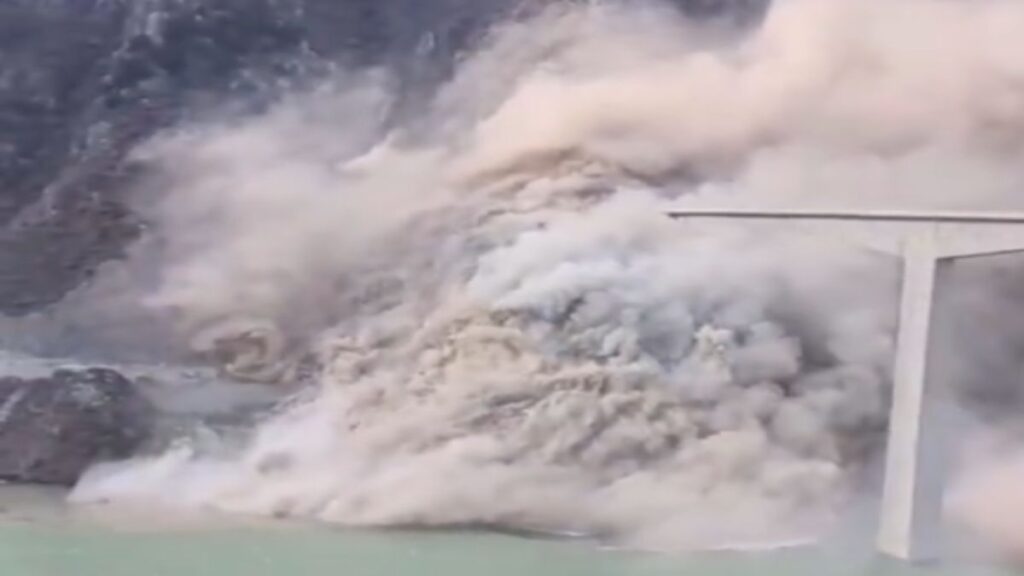
The collapse was not due to an internal structural flaw but rather massive landslides and severe slope failure near the bridge site.2 Cracks and terrain shifts had appeared on nearby slopes and roads along the right bank of the bridge the day prior.3 On November 11, 2025, the worsening conditions triggered a major landslide, which damaged the approach bridge and the road, causing a section of the structure to crumble and fall into the gorge below.3
Logistics and Mitigation Success
Crucially, the tragedy resulted in no reported casualties.2 Local police and authorities noticed the signs of instability—the cracks and terrain shifts—and acted swiftly, closing the bridge to all traffic the day before the collapse and removing all stranded vehicles.3
While the successful avoidance of casualties highlights effective, quick disaster response, the failure of a brand-new bridge on a critical route like NH 317 raises profound concerns about the preliminary phases of infrastructure development. The inability of the structure to withstand predictable geological pressures, or the failure to adequately mitigate those risks during construction, suggests fundamental flaws in site assessment, geotechnical engineering, and regulatory oversight during the design and planning stages.2 The immediate need for emergency closure and reconstruction imposes significant logistical and economic disruption on this crucial transport corridor, emphasizing the tangible costs of inadequate geological risk management.
IV. Historical Context: The Chronic Pattern of Preventable Collapses

The 2025 bridge collapses in Qinghai and Sichuan follow a historical pattern of infrastructure failures that disproportionately affect China. Statistical analysis confirms that the issue extends beyond poor maintenance or extreme weather events, pointing instead to chronic governance issues.
Elevated Risk and Human Factors
Historical data compiled by researchers reveals an elevated national risk profile. Between 2000 and 2014, a substantial 302 catastrophic highway bridge collapses occurred in China, all specifically attributed to human causes.13 This focus on preventable factors—excluding events caused solely by major natural disasters like earthquakes—frames the problem as primarily one of governance, design, and execution quality.
A comparison of recent global accidents further illustrates the severity of the domestic situation. According to incomplete statistics, over three years, China recorded 17 serious bridge accidents, significantly outweighing the 9 recorded in Sweden, Italy, and other surveyed countries combined.15
The analysis of failure stages reveals that collapses occur both during the service phase (due to lack of inspection, maintenance, or external factors like floods, as seen with the Zijin Bridge in Guangdong in 2019) and, critically, during the construction phase.7 Of the serious accidents reported in China over the three years, 10 occurred during construction.15 These construction-stage failures are directly tied to internal quality issues, including design flaws, construction errors, unauthorized modifications, and supervision malpractices.5
The sustained frequency of such incidents indicates that despite consistent improvements in design technology and maintenance levels over time, the implementation and regulatory enforcement mechanisms have not kept pace.7
Bridge Collapse Incidents in China (2000-2014): Primary Causes
| Accident Stage | Reported Collapses (Human Causes) | Key Contributing Factors (Human) |
| During Construction | High Incidence (10/17 serious accidents in 3 years globally) 15 | Design Flaws, Construction Errors, Unauthorized Modifications, Supervision Malpractice 5 |
| During Service Phase | 302 Highway Bridges (2000–2014) 13 | Lack of Inspection/Maintenance, Flawed Management, Overloading, External Human Factors 5 |
V. Systemic Malpractice: The Regulatory and Ethical Foundations of Failure
Investigative research into the deeper causes of these recurring collapses points toward a confluence of systemic governance defects rather than purely isolated engineering mistakes. Experts identify two major theoretical roots driving corruption and substandard work in the public construction sector: flawed regulation systems and the lack of a positive industrial climate.4
Flawed Regulation Systems
Empirical analysis suggests that flawed regulation systems exert a high influence on corruption vulnerabilities.4 The defects within this framework are multifaceted:
- Negative Leader Roles: This is identified as the most influential item regarding flawed regulation systems.4 When leaders in contracting or regulatory roles exert personal or undue influence, it compromises objective decision-making regarding project approval, material selection, and site safety.
- Inadequate Sanctions and Supervision: Following the influence of negative leadership, the lack of rigorous supervision and the application of inadequate sanctions for infractions are major contributing factors.4 Supervisors are tasked with preventing unauthorized modifications to design plans by the construction enterprise and maintaining vigilance over quality issues.5 Failures, such as the 2014 Jinshan Bridge collapse, have been officially attributed, in part, to supervision malpractices, highlighting the critical nature of this regulatory gap.5
- Administrative Complexity: The presence of multifarious licenses and permits further complicates the regulatory environment, creating opportunities for bureaucratic bottlenecks and non-compliance.4
The Culture of Corruption and Interpersonal Connections
The second major root cause, the lack of a positive industrial climate, is directly tied to ethical standards and cultural practices within the sector. The analysis indicates that the single most influential factor driving corruption vulnerability within this context is the prevalence of interpersonal connections.4
This reliance on personal relationships, often referred to as guanxi, frequently supersedes professional merit, rigorous auditing, or adherence to technical specifications. Interpersonal connections are followed in influence by overclose relationships among contracting parties and poor professional ethical standards.4
This cultural environment facilitates the overlooking of design flaws, the acceptance of cost-cutting measures, and the suppression of necessary technical warnings. The ultimate effect is a direct undermining of critical quality control processes, transforming technical risks into almost certain failures when structures are subjected to maximum design loads or unforeseen external stresses.
Vulnerabilities Driving Corruption in Chinese Construction (Based on Empirical Survey)
| Root Cause Category | Most Influential Vulnerability | Secondary Factors | Citations |
| Flawed Regulation Systems | Negative Leader Roles | Inadequate Sanctions, Lack of Rigorous Supervision 4 | 4 |
| Lack of Positive Industrial Climate | Interpersonal Connections (“Guanxi”) | Overclose Relationships Among Contracting Parties, Poor Professional Ethical Standards 4 | 4 |
VI. Geopolitical and Economic Ripple Effects
The continued frequency of domestic infrastructure failures carries severe economic, social, and geopolitical consequences that extend far beyond national borders.
Domestic Trust and Economic Cost
The bridge collapse results in substantial casualties, property damage, and severe social implications.7 The closure of vital logistical arteries, as seen with National Highway 317 in Sichuan 12, imposes direct and indirect economic losses, disrupting commerce and essential regional connectivity.
Domestically, the recurring tragedies erode public confidence in state capacity. The high-profile incidents, particularly those involving major state-owned contractors like CRCC, attract intense social media criticism, with the public demanding accountability for “preventable disasters”.11 This crisis of trust undermines the government’s narrative of continuous infrastructure quality improvement, even as policy initiatives such as the 14th Five-Year Plan focus on “high-quality green development”.17
Global Reputation and the Belt and Road Initiative (BRI)
The safety crisis directly challenges the international credibility of China’s infrastructure sector. Chinese engineering firms are central to the global execution of the Belt and Road Initiative (BRI), yet these domestic failures suggest that fundamental internal quality and governance issues remain unresolved.
The operational scale and ethical challenges of Chinese firms overseas are significant. Research has linked approximately 35% of Chinese infrastructure projects in the BRI to scandals involving corruption, environmental problems, or labor violations.18 Moreover, major state-owned entities involved in domestic failures are simultaneously facing increased scrutiny abroad. For instance, subsidiaries of the China Railway Construction Corporation, such as China Railway No. 10, have been under official investigation in other countries following catastrophic building collapses, raising serious international concerns about construction safety and ethical practices.19
This situation suggests that the systemic governance defects identified domestically—specifically flawed supervision, guanxi-driven decision-making, and negative leader roles—are inherent vulnerabilities that accompany China’s infrastructure export model. The failure to rigorously enforce quality control and sanction malpractice at home increases financial and reputational risk for international partners relying on Chinese state contractors for complex projects.
VII. Recommendations and The Path to Sustainable Infrastructure Quality
The prevention of future catastrophic collapses requires moving beyond retrospective investigations of technical faults to addressing the core systemic and cultural vulnerabilities identified by experts. Achieving sustainable bridge engineering necessitates comprehensive reform involving all stakeholders.5
Strengthening Regulatory Enforcement and Oversight
To combat the powerful influence of flawed regulation systems, specific measures targeting governance structure are essential:
- Mandatory Stricter Oversight: Civil engineering professionals stress the necessity of significantly stricter oversight and rigorous quality control measures across all infrastructure projects.11 Supervision teams must be mandated to actively prevent any unauthorized modifications to design plans by construction enterprises and maintain unwavering vigilance over quality throughout the project lifecycle.5
- Imposing Adequate and Consistent Sanctions: Addressing the failures linked to inadequate sanctions requires a commitment to consistently enforce legal consequences for malpractice and corruption.4 This includes establishing a robust legal framework that diminishes the influence of “Negative Leader Roles” by implementing highly transparent and accountable decision-making processes.4
Fostering an Independent and Ethical Climate
To overcome the pervasive influence of “interpersonal connections” (guanxi) and improve professional ethics, organizational changes are necessary:
- Independent Technical Auditing: Establishing qualified and independent third-party audit teams is essential, particularly for complex structures like the Jianzha Yellow River Bridge, during critical construction phases such as tensioning and foundational work.21 This independence counters the risk of overclose relationships among contracting parties.6
- Ethics and Professional Standards Renewal: A concentrated effort to promote high professional ethical standards is required to shift the industrial climate away from reliance on personal connections toward objective technical merit.6
Ultimately, the prevention and resolution of bridge collapse accidents align directly with the global mission of sustainable bridge development.5 This mandate requires governments, project owners, designers, constructors, managers, and users to collectively dedicate resources and commitment to promoting durable, high-quality structures that mitigate social, economic, and environmental risks for current and future generations.5
VIII. Conclusion: China’s Dual Challenge—Growth and Governance
The disasters of 2025, from the tragic failure of the Jianzha railway bridge during construction to the rapid geological collapse of the newly opened Hongqi highway bridge, provide a potent and costly reminder of the fundamental tension between China’s rapid infrastructure expansion goals and the maturity of its governance systems. While the nation has mastered the technology and speed required for record-breaking engineering feats, the underlying regulatory environment and ethical industrial climate remain dangerously vulnerable.
The evidence points to a recurring pattern where speed and interpersonal influence bypass rigorous quality controls, resulting in structures that are susceptible to technical failure, supervision malpractices, or premature collapse under geological stress. Until the systemic drivers of corruption—flawed regulation and the pervasive influence of unmanaged personal connections—are fully addressed through robust independent auditing and transparent legal accountability, the risk of technical failure will continue to undermine public trust and jeopardize both domestic safety and the credibility of China’s global infrastructure ambitions.